
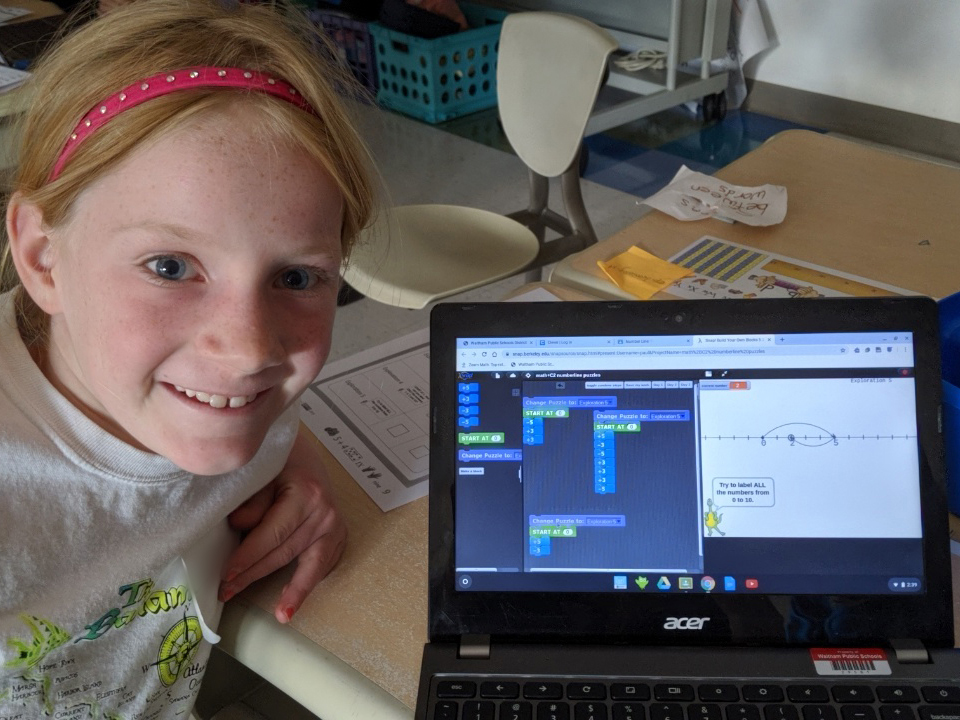
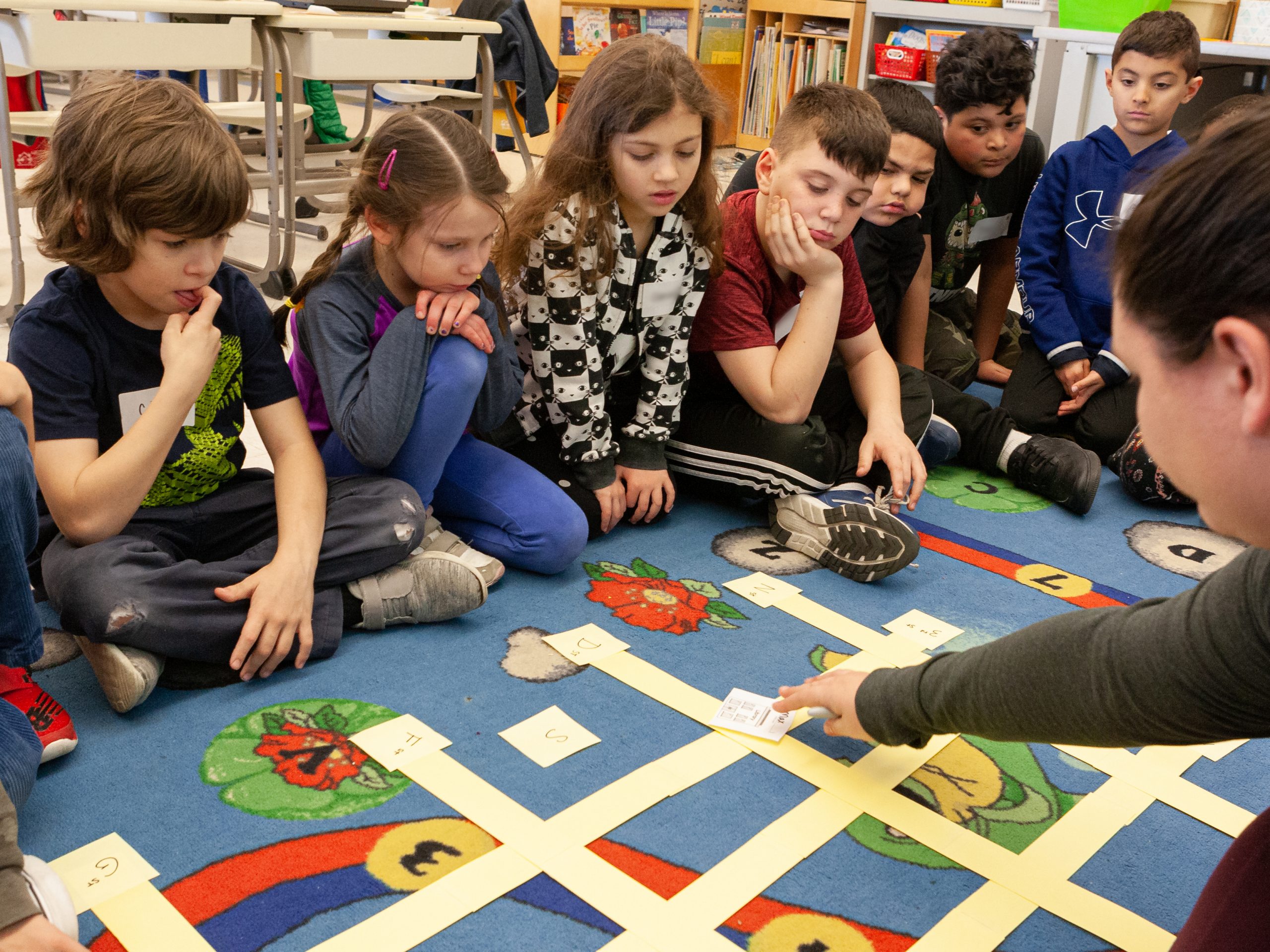
Children are problem solvers by nature. They are constantly—without always being aware of it—generalizing their observations of the world around them to make sense of what’s going on and make predictions about consequences. EDC’s work honors what students can figure out, and emphasizes connections, and promotes multiple approaches to topics. Our pedagogical approach builds on students’ curiosity, using puzzles and surprise to explore rich mathematical ideas.
“Mathematics is not about what you know, but about what you can figure out using what you know.”
— E. Paul Goldenberg
 JOIN OUR MAILING LIST